
World Rivers Day 2026: What Forestrails Learned About Water While Making Clay Bottles
World Rivers Day 2026 falls on September 27. It is a day to stop and think about the rivers that give us water to drink,

Ocean plastic pollution and sea turtles these two phrases have never been more heartbreakingly connected. A tiny hatchling emerges from the sand, instinctively crawling toward the glimmering waves. But instead of the ocean, it finds a battlefield of plastic bottles, bags, wrappers, forgotten flip-flops. This is not fiction. This is HOPE, a short film by Green Tree Productions that shows us, in just two minutes, the silent war happening on our shores.
And it’s not just the turtle’s story. It’s ours too.
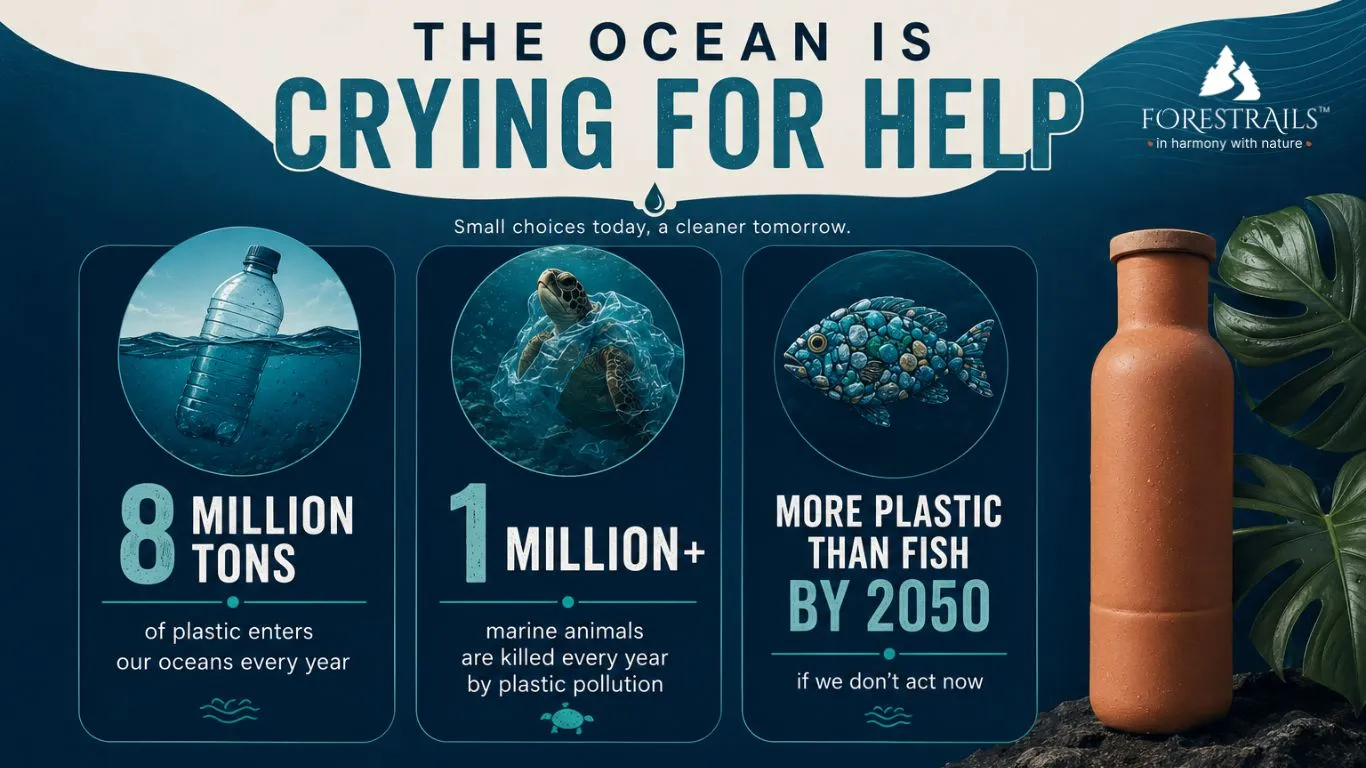
The ocean gives us every second breath we take. It regulates the climate, feeds over 3 billion people, and sustains over 80% of life on Earth. But today, it is drowning in plastic waste.
These numbers aren’t just shocking they demand action from every one of us.
The baby sea turtle plastic pollution story in HOPE represents every creature struggling to survive in a world reshaped by our convenience-driven lifestyles. Sea turtle conservation has become one of the most visible symbols of what’s at stake these ancient animals have roamed our oceans for over 100 million years, yet they now face extinction in a matter of decades.
But the film also symbolises something deeper that hope still exists. If we change. If we act.
Sea turtles are what ecologists call an indicator species: their health directly reflects the health of our oceans. When they struggle, the entire marine ecosystem is under threat. Marine life protection begins the moment we acknowledge that their battle is our battle.
At Forestrails, we believe in going beyond awareness to action. Here are five small but powerful ways you can protect oceans through conscious choices, starting today:
We often forget: this planet isn’t just ours. It belongs to every form of life from coral reefs to baby sea turtles facing ocean plastic pollution. They don’t have a voice in our systems, but they bear the cost of our actions.
Building sustainable ocean habits doesn’t require grand gestures. It begins with noticing. Noticing the straw you didn’t need. The plastic bag you could have replaced. The bottle of water you could have carried in clay.
These moments, multiplied by millions of people, reshape the world.
On this World Oceans Day, let’s commit to doing better. Let’s refuse to leave trash on beaches. Let’s make mindful choices every day. Let’s choose a lifestyle that respects and restores nature not one that exploits it.
Explore more on how our everyday choices connect to sustainable living on the Forestrails blog and learn about the materials behind our products on our brand story page.
Watching the short film HOPE by Green Tree Productions takes only two minutes. But those two minutes can change the way you see every bottle, every bag, every piece of plastic you touch for the rest of your life.
And when you’re ready to act when the weight of those statistics and that small turtle’s struggle moves you know that every eco-friendly water bottle India swap, every beach picked up, every share of this story is a vote for a different future.

If you’ve been looking for a small, tangible step toward plastic-free living, our handcrafted clay bottles might be the start you’re looking for. Made with natural clay, free of plastic and chemicals for you, and for the ocean.
HOPE is a 2-minute short film showing a baby sea turtle navigating a beach covered in plastic waste. It turns Ocean plastic pollution statistics into a visual story that moves people to act.
Over 11 million metric tonnes of Ocean plastic pollution enter the oceans every year (UNEP). By 2050, plastic could outweigh fish in the ocean.
Turtles mistake plastic bags for jellyfish and eat them, causing internal blockages. Plastic debris also traps hatchlings on beaches before they can reach the water.
It means cutting out single-use plastics from daily life. Start small — swap your plastic water bottle, carry a cloth bag, and say no to plastic straws.
Yes. Clay is 100% natural, biodegradable, and chemical-free. Plastic takes up to 450 years to break down and sheds microplastics throughout. Clay simply returns to the earth.
Watch and share ocean-awareness films like HOPE. Join a beach cleanup, swap one plastic item for a reusable alternative, or donate to an ocean conservation organisation. Every action counts.
World Rivers Day 2026 falls on September 27. It is a day to stop and think about the rivers that give us water to drink,

Traditional clay products are useful in modern homes because they cook food slowly, keep water and grain cool without power, and break down into soil when you are