
World Rivers Day 2026: What Forestrails Learned About Water While Making Clay Bottles
World Rivers Day 2026 falls on September 27. It is a day to stop and think about the rivers that give us water to drink,

Kerala runs on tradition. Onam brings this out every year. Homes get cleaned. Pookalam flowers cover courtyards. Families cook a full sadya on banana leaves. But long before any of this turned into a festival for photos, it was just daily life.
Traditional clay vessels in Kerala were part of that daily life. They sat in kitchens, courtyards, and puja rooms. Nobody called them decor back then. They were simply what people used every day, without thinking twice about it.
This Onam, it is worth looking at these old clay pots again. Not as museum pieces. As objects that shaped how Kerala families cooked, stored water, and lived through the seasons.

Walk into an old Kerala house and clay was hard to miss. Clay vessels used in Kerala homes did more than one job. A kalam stored rice. A manchatti cooked fish curry. A nirakudam kept grain safe from moisture and pests. Small earthen lamps lit up puja rooms during prayers.
None of these needed a shop trip every few months. A well made clay pot lasted for years if a family treated it right. People passed pots down the same way they passed down recipes, from one kitchen to the next.
This is what traditional pottery in Kerala looked like up close. Nothing fancy. Just useful, everyday objects shaped by hand from local clay. Read more on Ayurvedic water wisdom and traditional hydration for how this connects to how Kerala households drank water.
Kerala food has a strong link to clay cooking. Fish curry made in a manchatti tastes different from fish curry made in steel. Ask anyone who grew up eating it that way. Clay holds heat evenly. It also carries a mild earthy taste that steel and aluminum cannot copy.
Rice was often served in wide clay vessels called chatti. Kanji, or rice gruel, was scooped from a clay bowl too. Even appam, that soft rice pancake with crisp edges, needed a curved clay pan called an appachatty to cook properly.
During Onam, this link gets stronger. Onam sadya is a huge meal with more than twenty dishes on a banana leaf, a tradition documented by Kerala Tourism. In many older Kerala households, at least a few of these dishes were once cooked in earthen vessels, long before steel and pressure cookers took over most kitchens.

Now to the main topic. Traditional water storage vessels used in Kerala relied on clay pots, not plastic tanks or steel drums.
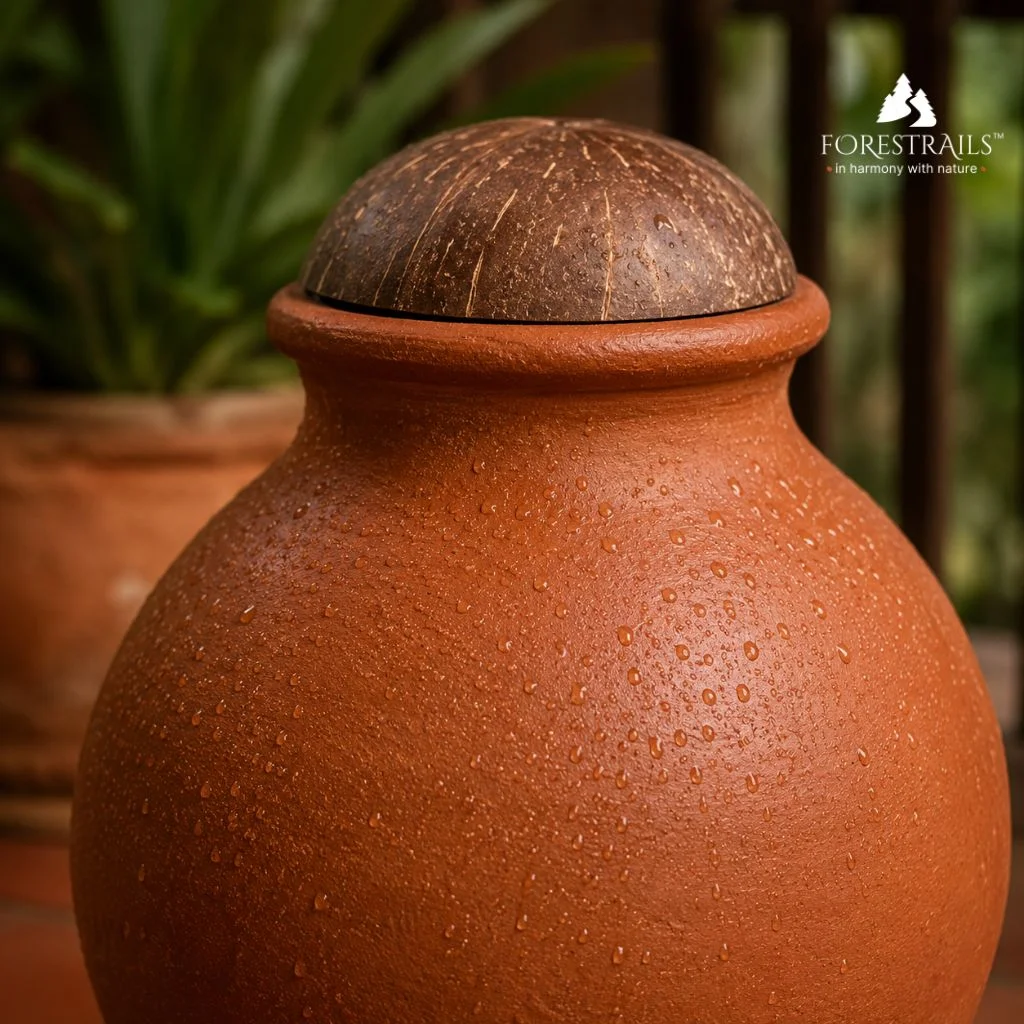
A large earthen pot, called a kalam or curam depending on the region, sat in a cool corner of the kitchen or courtyard. Water went in fresh from the well every morning. Clay has tiny pores across its surface. Water seeps through these pores and evaporates slowly on the outside. That process pulls heat out of the pot, so the water inside stays cool without any electricity.
That is basic physics, and Kerala households used it every day without ever calling it physics. It was common sense, passed from grandmother to mother to daughter. This is the same idea Kerala’s water storage traditions relied on long before refrigeration existed you can read more in our piece on how to clean and maintain a clay water bottle today.
Alongside the everyday water pot, homes also kept a vessel called a kindi. This one was not clay. It was cast in bell metal, an alloy of copper and tin, as Wikipedia’s entry on the kindi notes. The kindi had a narrow spout, made so you could pour water for washing hands or feet without letting the water touch the vessel or get dirty. Guests were welcomed with a kindi of water at the doorstep. In many communities, a new bride also received a set of household vessels, including clay pots for daily use, as part of her wedding gifts.
So water storage in traditional Kerala homes was never just one object. It was a small system. Clay pots for cooling and storing. A kindi for pouring and for welcoming.
Onam is not only about food and flowers. Clay and earthen objects show up in smaller ways too.
Simple earthen lamps, made of baked clay, get lit during many Kerala festivals and daily prayers. Some households still place plain clay diyas alongside brass lamps during Onam evenings, part of the ten-day celebration that Kerala’s official tourism board traces back through the state’s harvest traditions.
Village festivals across Kerala have long used local clay pots for offerings. Temples kept earthen vessels for specific rituals too. None of this was treated as rare or special. It was just how things were done.
This matters because it shows clay was not stuck in the kitchen. It moved through Kerala’s wider cultural life, from cooking pots to festival lamps to wedding gifts. If gifting is on your mind this season, our guide to choosing a clay water bottle covers what to look for.
Every clay pot had a maker. In Kerala, the traditional potter community is called Kusavan in most districts, though local names like Kumbaran, Velan, and Kulala come up depending on the region. An ethnographic study of pottery workshops in central Kerala recorded how these families still work in small, home based sheds, using wheel, mould, and hand shaping methods passed down through generations.
Pottery in Kerala runs in families, a pattern also seen among potter communities across India. A child learns by watching a parent shape wet clay, not from a classroom. Reading the clay’s moisture, centering it evenly on the wheel, and firing it without cracks all take years to get right.
Places like Aruvacode in Malappuram district are known for this craft. A revival project there, called Kumbham, helped local potters keep their work alive after plastic and steel began taking over the market. If you’d like to see how Kerala’s craft heritage connects to today’s artisan-made products, our post on the Swadeshi movement and Indian artisan craftsmanship goes deeper into this.
Earth becomes clay in an artisan’s hands. Clay becomes a pot. The pot becomes part of a household. And the household passes the skill on to the next generation. That is the real thread running through all of this.
Step back and look at the pattern. Kerala’s traditional clay vessels tell you a few things about the culture that made them.
People used what was close by. Clay came from local soil, not a warehouse far away. Objects were built to be used, not just displayed. A kalam had a job to do. So did a manchatti and a kindi. Skills stayed inside families. Nobody wrote a manual. Knowledge moved from one pair of hands to the next.
None of this was framed as a lifestyle choice back then. It was simply how a household worked. That is worth remembering today.
You do not need to rebuild the old kitchen to respect where it came from. Most homes today run on steel, plastic, and electricity, and that works fine for daily life.
But some of that old thinking still holds up. A well made object, used daily, built to last. That idea has not gone out of style, even though the materials around us have changed.
This is part of what shapes Forestrails’ clay water bottles, a modern version of an idea Kerala households understood generations ago: clay keeps water cool and tastes clean, without plastic or power involved. It carries the same basic idea forward, shaped for how people live now.
Kerala households used clay vessels for storing water and rice, cooking fish curry, serving kanji, and lighting earthen lamps during prayers and festivals.
Clay is porous. Water seeps through tiny pores and evaporates on the outside, which pulls heat out of the pot and keeps the water inside naturally cool.
No. A kindi is usually cast in bell metal, an alloy of copper and tin, not clay. It was used for pouring water during rituals and for welcoming guests.
Potter communities known locally as Kusavan, Kumbaran, Velan, or Kulala made Kerala’s clay vessels, with skills passed down within families over generations.
A manchatti is an unglazed clay pot traditionally used across Kerala for cooking dishes like fish curry, known for holding heat evenly.
Some households still use clay pots for cooking and rituals, and pottery revival projects like Kumbham in Malappuram keep the craft active for modern buyers.
World Rivers Day 2026 falls on September 27. It is a day to stop and think about the rivers that give us water to drink,

Traditional clay products are useful in modern homes because they cook food slowly, keep water and grain cool without power, and break down into soil when you are