
Forestrails

Enjoy 3% discount when you pay online!
Free shipping for limited time!
Enjoy 3% discount when you pay online!

Eco-friendly Holi: Celebrating the Vibrant Colors of Nature

Eco-friendly Holi is not a compromise. It is a return to how the festival was always meant to be celebrated with ingredients from nature, not chemicals from a factory. This guide tells you exactly what to change, what to skip, and how to still have a vibrant, joyful celebration without harming your skin, your family, or your environment.

Holi marks the triumph of good over evil and the arrival of spring. Millions celebrate it across India and the world every year. But the version most people play today, the one with synthetic powder and plastic pichkaris, is only a few decades old. The original Holi used flowers, natural dyes, and fresh water. Going back to that is not radical. It is sensible.

Why Conventional Holi Has an Environmental Cost

Before looking at alternatives, it helps to understand the scale of the problem. According to a study published on NCBI, synthetic Holi colors frequently contain heavy metals like lead, mercury, and chromium. These cause skin irritation, allergies, and respiratory problems, especially in children.

When you wash these colors off, they flow into drains, groundwater, and rivers. The ScienceDirect research on festive chemical pollution documents how synthetic dye discharge spikes measurably in Indian water bodies during and after Holi. It is a short festival with a long environmental tail.

Plastic waste compounds the problem. Disposable pichkaris and water balloons end up in landfills after a single use. The WHO’s report on microplastics in drinking water notes that single-use plastics break down into microplastics that enter food and water chains and are nearly impossible to remove.
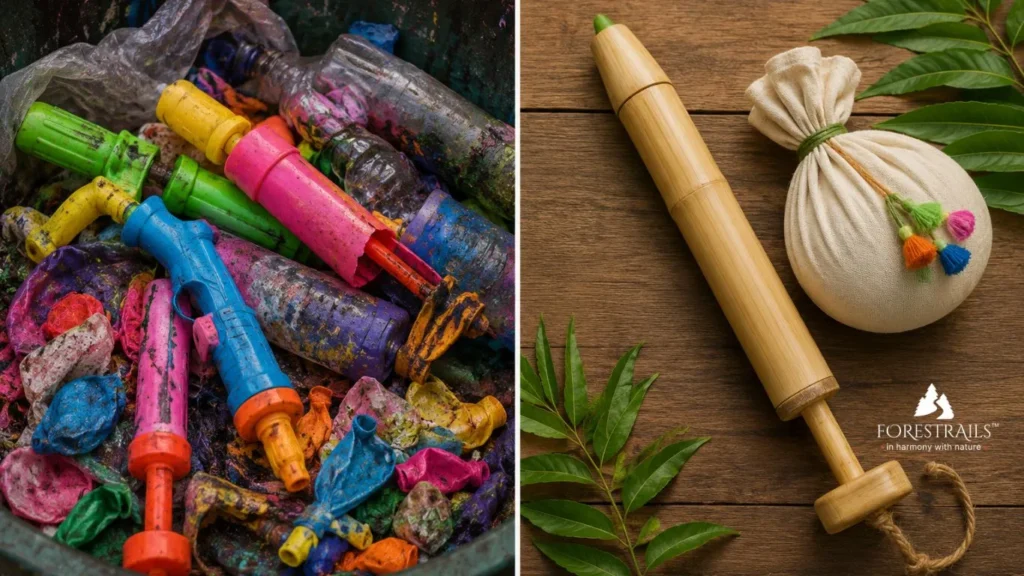
Water is the third issue. India faces serious water stress. Our World in Data reports that over 160 million Indians still lack reliable access to safe water. Burning through hundreds of liters per household for a single celebration is a choice worth reconsidering.
Plastic Holi waste versus sustainable bamboo pichkari and cloth water bombs

Natural Holi Colors: What They Are and How to Make Them

Natural Holi colors come from plant-based sources. They are safe on skin, biodegradable, and often carry mild skin benefits. You can make them at home or buy them from brands that list ingredients clearly.

Here are five colors you can make yourself with ingredients from a grocery store:

  • Red: Dry hibiscus flowers and grind them, or use beetroot powder mixed with a little cornstarch.

  • Yellow: Mix turmeric with gram flour (besan). Both are gentle on skin.

  • Green: Dry neem leaves in the sun and grind them fine. Neem has natural antibacterial properties, referenced in SpringerNature as a therapeutic plant used in traditional Indian medicine.

  • Blue: Dry and crush butterfly pea flowers. The pigment is vibrant and fully water-soluble.

  • Pink: Mix dried rose petals with arrowroot powder.

Store them in glass jars or cloth bags instead of plastic containers. Each batch costs far less than packaged colors and produces no synthetic waste.

If you prefer to buy, look for herbal colors with 100% natural ingredients, biodegradable packaging, and no added fragrance. Forestrails’ guide to eco-friendly festive products lists what to check for on a label before buying.

A 2022 review on PubMed on plant-based dye safety confirms that anthocyanin-based dyes (the pigment in hibiscus and butterfly pea) show no significant dermal toxicity in standard patch tests.

How to Play Eco-Friendly Holi Without Losing the Fun

Sustainable Holi celebrations do not have to be quiet or restrained. These swaps maintain the energy of the festival while cutting out what causes harm.

1. Skip the plastic pichkari

Metal and bamboo pichkaris exist and they last for years. A stainless steel pichkari bought once in 2024 is still working in 2027. The math is simple: less plastic, less spending over time, same experience.

2. Replace water balloons with cloth alternatives

Cloth water bombs are washable and reusable. They fill, throw, and burst the same way a balloon does. After the game, you collect them, wash them, and use them next year.

3. Play a dry Holi

Dry Holi with chemical-free Holi colors is increasingly popular in urban India, especially among people living in apartment complexes with limited drainage. It conserves water and keeps cleanup quick.

4. Choose old clothes, not new ones

Buying a new outfit for one day of Holi adds to fast fashion waste. Wear clothes you already own and do not mind staining. Old cotton works perfectly and can be washed with a mild, eco-friendly detergent.

Water Conservation During Holi

Water conservation during Holi is one of the most direct ways to reduce your celebration’s footprint. A few concrete changes make a real difference:

  • Use a bucket for rinsing instead of a running tap. A typical running tap uses 8 to 10 liters per minute.
  • Play for 1 to 2 hours with dry colors rather than spending 4 to 5 hours with water.
  • Ask children to refill pichkaris from a shared bucket rather than a hose.

If your building has a rooftop, collect rainwater in the days before Holi. Even a 100-liter collection can offset most of what one household uses. Read more about mindful water habits in Forestrails’ 10 Effective Steps to Detox Your Home.

Sustainable Post-Holi Cleanup

Zero-waste festival cleanup starts with what you use, not what you throw. Natural colors wash off with water and mild soap. You do not need strong detergents or multiple washes.

  • Compost flower petals and plant-based color residue. They break down within days.
  • Use baking soda and lemon juice to clean stubborn color stains instead of bleach.
  • Stained cotton clothes can be repurposed as cleaning rags or craft material.
  • Avoid putting color-soaked clothing in washing machines for the first rinse hand-rinse first to prevent drain buildup.

Natural colors require far less water and effort to remove than synthetic ones. The same logic applies to everyday choices, like choosing clay over plastic for water storage. The more you reduce the chemical load, the easier the cleanup.
Eco-friendly Holi cleanup using minimal water and natural color ingredients

Wearing Sustainability Into the Festival

Eco-conscious festive living extends beyond colors and water. Think about the full arc of your celebration:

  • Serve traditional Holi foods like thandai in clay cups instead of plastic or paper cups.
  • Decorate with marigold and rose garlands, which are compostable after use.
  • Buy from small artisans selling handmade clay or brass decorative pieces. Money stays local, and the item lasts.
  • Skip packaged gift boxes wrapped in plastic. A small jar of homemade natural color tied with jute is more personal and produces no waste.

Herbal Holi powder and clay-based gifts fit naturally into the wider idea of sustainable Indian festivals. These are not new concepts. They are traditional practices that got sidelined by cheap manufacturing in the 1980s and 1990s. Bringing them back does not take much.

Making Your Eco-Friendly Holi Count

Sustainable Holi celebration is not about perfection. You do not have to do everything on this list in year one. Pick two or three changes, do them well, and build from there. Switch to organic Holi colors this year. Replace plastic pichkaris next year. Each choice compounds.

The festival itself has survived thousands of years. It will keep going. The question is in what form and at what cost to the environment. Small, consistent shifts in how millions of households celebrate make a cumulative difference that no single individual action can match.

And that is what plastic-free Holi is really about. Not sacrifice. Just choices made with a bit more awareness.

Final Thought

If you already think about what goes into your food, it makes sense to think about what goes into your water too. Forestrails makes unglazed clay water bottles that cool naturally, add trace minerals, and produce no plastic waste year-round, not just at festivals. Worth a look after Holi.

Frequently Asked Question

What are eco-friendly Holi colors made of?

Natural Holi colors are made from plant-based ingredients such as turmeric, beetroot powder, hibiscus, neem leaves, butterfly pea flowers, and cornstarch. They contain no synthetic dyes, heavy metals, or toxic chemicals. They are safe for skin, fully biodegradable, and easy to wash off.

Synthetic colors often contain lead oxide, chromium, and industrial dyes. These cause skin rashes, eye irritation, and in repeated exposure, longer-term health issues. When they wash off into the drain, they enter waterways and disrupt aquatic ecosystems. A peer-reviewed NCBI study documented heavy metal concentrations in commercial Holi colors well above safe thresholds.

Play a dry Holi using herbal Holi powder instead of water-heavy play. When you do use water, fill a shared bucket and refill from it rather than using a running hose. Hand-rinse after the celebration instead of showering multiple times. These three habits alone can cut per-person water use by 60% to 70%.

Yes, in general. Colors made from turmeric, beetroot, rose petals, and cornstarch are safe for most children and pets. Neem-based green may cause mild bitterness if ingested, so keep it away from very young children. Always do a small patch test before applying anything new to sensitive skin.

Metal (stainless steel) and bamboo pichkaris are the most durable alternatives. They cost slightly more upfront but last for many years, making them cheaper over time. Cloth water bombs replace single-use balloons, can be washed and reused, and create the same experience without the plastic residue. Check out Forestrails’ eco-friendly product recommendations for options available in India.

Share Article

Related Post