
World Rivers Day 2026: What Forestrails Learned About Water While Making Clay Bottles
World Rivers Day 2026 falls on September 27. It is a day to stop and think about the rivers that give us water to drink,

Plastic free doesn’t have to mean overnight. Every July, millions of people use Plastic Free July as a nudge to look at where single-use plastic quietly piles up the kitchen bin, the bathroom shelf, the grocery bag you forgot to refuse. If you already know plastic pollution is a problem but aren’t sure how to reduce plastic use at home, this is your practical, week-by-week plan. No overwhelm, no guilt trips just small swaps that add up over 30 days.

It’s easy to think one straw or one shampoo bottle won’t make a difference. But researchers have now found microplastics in every one of 62 human placenta samples tested, with concentrations far higher than what’s been measured in blood (ScienceDirect, 2026). A separate electron-microscopy study went further, locating microplastic particles inside human placental cells themselves (NCBI). Closer to home, India generates close to 3.9 million tonnes of plastic waste a year, and only around 60% of it gets recycled (PIB press release). None of this is meant to scare you it’s meant to explain why small household swaps, multiplied across millions of homes, genuinely move the needle.
The kitchen is where most single-use plastic sneaks in cling film, milk pouches, disposable spoons. Start here because the swaps are cheap and the habit sticks fast.
These are exactly the kind of eco-friendly kitchen swaps that don’t need a big budget most Indian kitchens already have steel and glass containers tucked away; the trick is choosing them over plastic by default.

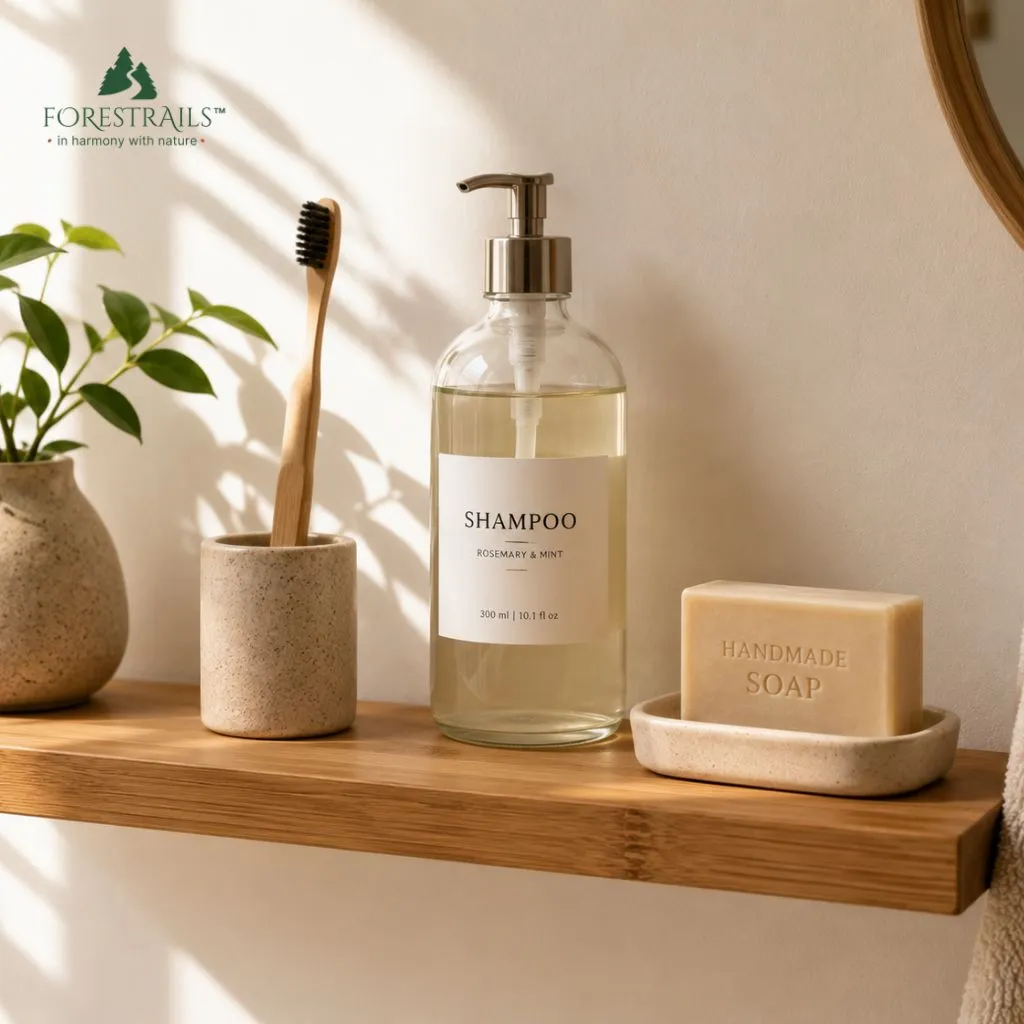
The bathroom shelf is the second-biggest offender shampoo bottles, razors, cotton buds. Here’s where to buy plastic-free personal care products online in India without spending hours researching:
These are genuinely plastic-free personal care products not just “eco packaging” on the outside with plastic sachets inside, which is worth checking before you buy.
This is usually the hardest habit to break, so give it a full week. A few starting points for zero waste grocery shopping India wide:
You don’t need every best zero-waste online store in the country pick one or two that deliver to your city and build the habit of ordering from them for pantry refills.
The last week is about connecting with people doing this at scale. Plastic Free July started in Western Australia in 2011 and has since grown into a movement with well over 100 million participants across roughly 190 countries (Plastic Free July, official).
Read more about how reduce single-use plastic India wide efforts are playing out at the community level, from temple cloth-bag drives to neighbourhood refill days small local stories that add up faster than any single policy.

Explore more sustainable living tips and zero-waste starting tips on our blog, including our piece on traditional, low-waste ways to store water at home a good next read once your 30 days are done.
If you’re already rethinking single-use plastic in your kitchen, a sustainable bottles switch is often the easiest one to make permanent we make handcrafted terracotta water bottles at Forestrails, built for exactly this kind of everyday. No pressure, just an option.
A global campaign held every July encouraging people to reduce single-use plastic through small, everyday choices (Plastic Free July).
No. Even swapping two or three daily-use items makes a real difference this plan is built around gradual, sustainable change, not perfection.
Cloth bags for groceries and a reusable bottle. Both need zero learning curve and save the most single-use plastic per week.
Bare Necessities and Brown Living are two reliable online options that ship pan-India with plastic-free packaging.
Not necessarily. Buying in bulk from refill stores often costs less per kilo than packaged supermarket versions the price jump is usually in personal care, not groceries.
Search local NGOs like Earth5R, check your city’s cleanup calendar, or start with your own apartment complex even a five-person refill circle counts.
World Rivers Day 2026 falls on September 27. It is a day to stop and think about the rivers that give us water to drink,

Traditional clay products are useful in modern homes because they cook food slowly, keep water and grain cool without power, and break down into soil when you are