
World Rivers Day 2026: What Forestrails Learned About Water While Making Clay Bottles
World Rivers Day 2026 falls on September 27. It is a day to stop and think about the rivers that give us water to drink,

Quick answer: To use a clay water bottle for the first time: soak it in clean water for 18-24 hours, rinse thoroughly, air dry completely, then fill with purified water. Clean with plain water and a soft brush – no soap. Replace every 12-18 months. That is the full routine in five seconds.
You just received your first terracotta water bottle – and you are staring at it wondering: do I need to do something special before I use it? Yes. A small bit of first-time preparation makes all the difference between a bottle that performs beautifully and one that smells earthy for weeks.
This clay water bottle beginner guide walks you through everything: first-use preparation, daily use tips, cleaning, common mistakes, and when to replace. No guesswork, no contradictory advice – just clear, practical steps backed by how clay actually works. For the science behind why clay water storage is worth using at all, read our guide on the 6 timeless benefits of drinking from an earthen pot.
A clay water bottle‘s power comes entirely from its porosity. The microscopic pores in unglazed terracotta allow slow water evaporation, which cools the contents naturally. According to a 2025 ScienceDirect review on clay pot coolers, evaporative cooling in clay vessels can reduce stored water temperature by 5-15°C depending on climate – a significant, energy-free effect. These same pores also enable trace mineral exchange and pH balancing.
But those pores come with a catch: fresh clay can carry dust, kiln residue, and a strong earthy smell until properly prepared. The how to season clay pot for drinking water process – soaking and drying – hydrates the clay structure, stabilises the pores, and clears out any residue from firing. Skip it and your first few bottles of water will taste intensely earthy. Do it, and your bottle is ready to perform from day one.
Hold the bottle under running water and rinse inside and out. Do not use soap – clay is porous and will absorb detergent chemicals, transferring them to your drinking water. Plain cold water is all you need.
Submerge the entire bottle in a bucket or large bowl of clean water. Leave it for at least 18 hours – 24 is ideal. This fully hydrates the clay, stabilises the pore structure, and flushes out any residue from the manufacturing process. The bottle may look darker after soaking – that is normal and expected.
Remove from the soak and place upside down on a clean surface in a well-ventilated spot. Allow to dry fully – at least 3-4 hours. Do not place in direct harsh sunlight for extended periods, as rapid drying can stress the clay. A shaded, breezy spot is ideal.
Fill your bottle with clean filtered or RO-purified water. Let it sit for at least 6 hours before drinking – overnight is best. This first soak completes the seasoning, and the water that comes out will be at the bottle’s natural cool temperature with a subtly improved taste. This is terracotta bottlefirst use done right.
Once seasoned, daily use of your earthen water bottle is simple. Here are the tips that matter:
If you are making the switch from plastic, here is what the research says about what you are leaving behind. A 2024 PMC study on BPA leaching from plastic bottlesfound measurable BPA migration even at room temperature – a chemical that mimics estrogen and disrupts hormonal function. Meanwhile, NIH research found an average of 240,000 plastic particles per litre in bottled water, with 90% being nanoplastics that can cross the blood-brain barrier.
A 2025 PMC review on microplastics in drinking water confirmed that bottled water is among the highest-risk exposure routes for microplastic ingestion. Unglazed terracotta releases none of these. Not BPA, not phthalates, not a single plastic particle. This is the clay bottle vs plastic bottle case in plain numbers. Also see our detailed breakdown on terracotta bottle safety: 5 myths and facts.
Clay bottle care and maintenance is simpler than most people expect – the main rule is to keep it chemical-free.
| DO’s | DONT’s |
| Rinse daily with plain cold water | Use soap or dish detergent – it seeps into pores |
| Use a soft bottle brush for weekly interior scrub | Put in dishwasher or microwave |
| Use diluted white vinegar or baking soda for odour removal once a month | Use metal or abrasive scrubbers |
| Air dry completely before storing | Store in an airtight bag or sealed space |
| Store with the cap off in a ventilated spot | Leave water sitting for more than 2 days without rinsing |
For stubborn odours after extended use: fill the bottle with a 1:5 mix of white vinegar and water, leave for 30 minutes, rinse thoroughly three times with plain water, and air dry fully. This resets the pores without any chemical residue.
The earthy aroma from a new unglazed terracotta water bottle India-made vessel is called petrichor – caused by geosmin, a natural organic compound produced by soil bacteria during the clay firing process. It is the exact same smell as rain on dry earth. It is harmless. The 2023 PMC study on Ayurvedic clay vessel use records no adverse health effects from naturally occurring clay compounds in water storage vessels. The smell typically fades within 2-3 weeks of regular use as the bottle is naturally seasoned by use. If it persists beyond a month, a vinegar rinse cycle usually resolves it.
Once you are 2-3 weeks into regular use of your clay water bottle, here is what most users notice:
For a complete cultural and scientific perspective on why this tradition has survived across five global cultures, see our guide on clay vessel traditions: 5 cultures that still embrace it.
Clay bottles are not permanent – and knowing when to replace them is part of clay bottle careand maintenance:
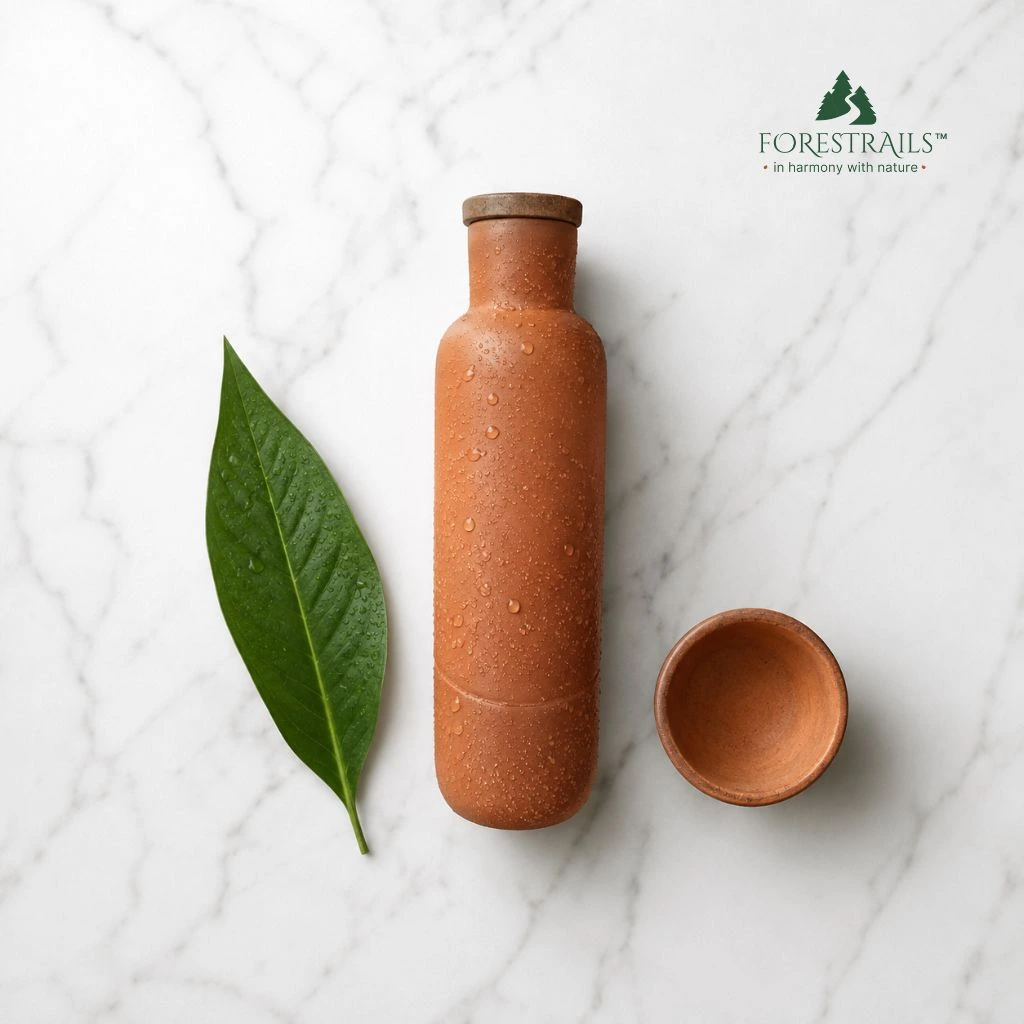
If you are looking for a bottle that is already pre-seasoned and ready to use out of the box, Forestrails handcrafted terracotta clay water bottles come in 600 ml and 1-litre sizes – unglazed, natural mitti, no paints, no coatings. Made for everyday Indian life. Worth a look if you want to skip the guesswork.
Rinse with plain water, soak the entire bottle for 18-24 hours, air dry completely, then fill with purified water and wait 6-8 hours before drinking. No soap, no dishwasher, no direct sunlight during drying.
Yes. Seasoning – the 18-24 hour water soak – hydrates the clay structure, stabilises the pores, and removes firing residue. It is a one-time process done before first use. After that, regular rinsing is sufficient.
No. Clay is porous and absorbs soap chemicals into its walls, which then transfer to your drinking water. Use plain water and a soft brush for daily cleaning. Use diluted white vinegar or baking soda for deeper monthly cleaning.
The earthy smell is petrichor – caused by geosmin, a harmless natural compound from soil bacteria in the clay. It is safe and typically fades within 2-3 weeks of regular use.
In Indian summer conditions, clay evaporative cooling keeps water 5-15°C below ambient temperature continuously, as long as there is water in the bottle and the outer surface can evaporate. Shaded storage enhances the cooling effect.
No. Sudden thermal shock – hot water in a cold clay bottle or vice versa – can cause micro-cracks. Clay bottles are designed for ambient-to-cool water storage only.
Every 12-18 months with daily use, or sooner if you notice cracks, persistent odour after cleaning, or visible mould. Regular inspection and air drying significantly extends bottle life.
World Rivers Day 2026 falls on September 27. It is a day to stop and think about the rivers that give us water to drink,

Traditional clay products are useful in modern homes because they cook food slowly, keep water and grain cool without power, and break down into soil when you are