
World Rivers Day 2026: What Forestrails Learned About Water While Making Clay Bottles
World Rivers Day 2026 falls on September 27. It is a day to stop and think about the rivers that give us water to drink,

Clay vessels : The five cultures that are still active are India (matka & kulhad), Japan (Six Ancient Kilns), Morocco (tagine & water jars), Vietnam (Chăm pottery – UNESCO-listed), and Peru (Andean aryballos). Each uses traditional earthen pots worldwide not just as vessels, but as living cultural identity.
Clay is humanity’s oldest technology. Long before steel, glass, or plastic, every civilisation on earth shaped earth and water into vessels. But unlike most ancient technologies, clay pots were never fully replaced. In five cultures across Asia, Africa, and Latin America, the clay vessel tradition has survived industrialisation, globalisation, and the age of plastic – not as a relic, but as a living, breathing everyday practice.
This post explores those five cultures, what makes their clay water vessel history unique, and why their traditions are not just surviving but returning to global relevance. For the health science behind why clay water storage works, read our companion guide on the 6 timeless benefits of drinking from an earthen pot.
Before diving into the cultures, it is worth asking: why do cultures that use clay pots for water keep doing so even when modern alternatives exist? The answer is rarely just nostalgia. A 2024 PMC study on clay pots as sustainable water containersconfirmed what these cultures have always known – clay-stored water is measurably higher in dissolved oxygen, lower in total dissolved solids, and naturally alkaline. The vessel improves the water. No modern container does the same passively.
A 2024 PMC cross-cultural pottery study also showed that community-specific ceramic shapes persist across generations not just through instruction but through embedded cultural transmission – meaning the clay pot is inseparable from identity itself.
India’s relationship with clay vessels is among the oldest and most continuous in the world. Evidence of Indian matka tradition traces back to the Indus Valley Civilisation (c. 2500 BCE), where fired clay pots were used for water storage, grain, and ritual. According to Wikipedia’s overview of pottery in the Indian subcontinent, large matki jars for water storage form the largest category of traditional Indian pottery – a continuous thread across 4,500 years.
Today, the matka remains a fixture in Indian homes, particularly in summer, as an energy-free water cooler. Kulhads – small disposable clay cups – are still used at chai stalls across the country. Clay is not a heritage exhibit here; it is the morning routine. For more on the cultural story, see our piece on why every Indian home once had a matka.

Japan has one of the world’s most sophisticated terracotta traditions around the world – but it is also one of the most philosophically rich. Japan’s Six Ancient Kilns (Rokkoyo) – Bizen, Shigaraki, Tokoname, Echizen, Tamba, and Seto – have been producing unglazed and minimally glazed clay vessels continuously since the 12th century. In 2017 they were designated Japan Heritage sites by the Agency for Cultural Affairs.
According to the Japanese Government’s official cultural overview of the Six Ancient Kilns (2026), vessels from these kilns were originally large storage jars and water pots for daily life – practical wares rooted in agrarian culture. With the rise of the tea ceremony in the 16th century, Japanese Bizen pottery became associated with wabi-sabi: the beauty of imperfection, of natural textures, of clay fired without glaze. This philosophy made the clay pot not just a vessel but a meditation object – and that tradition continues in Japan’s contemporary ceramics scene today.
In Morocco, clay is not just for water – it is how food is cooked, shared, and defined. The Moroccan tagine clay pot is both the name of the dish and the conical clay vessel it is made in: a slow-cooked stew of spiced meat and vegetables, prepared in a sealed earthenware pot over low heat. As National Geographic’s coverage of Morocco’s High Atlas food culture describes, tagine is so central to daily life that it is sometimes prepared twice in one day.
Beyond the tagine, Moroccan Fez and Safi pottery – centuries-old blue-and-white geometric ceramics – are among the most recognised clay water vessel history traditions in the Arab world, documented in UNESCO’s own art collection. Clay storage jars for water (known as jars or zir) are still used across rural Morocco as natural coolers, drawing on the same evaporative cooling principle as the Indian matka. This is the traditional earthen pot worldwide in its purest form: unchanged across continents and centuries.

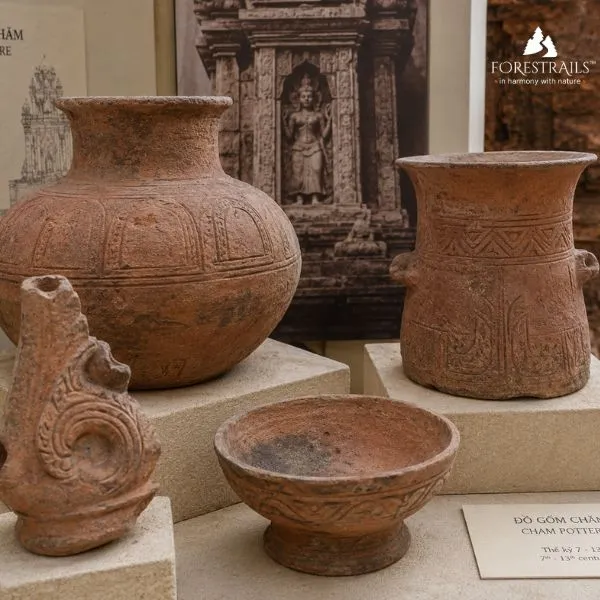
The Cham people of Vietnam carry one of the most endangered yet most important clay vessel traditions on earth. Their pottery-making practice – passed exclusively through women within the community, without using a wheel, shaped entirely by hand using traditional tools – was inscribed by UNESCO in 2022 on its List of Intangible Cultural Heritage in Need of Urgent Safeguarding. According to the UNESCO inscription for Cham pottery, the craft is viewed as an expression of individual creativity and a source of social and economic autonomy for women.
The pots themselves – unglazed, fired in open kilns at low temperatures – are used for water storage, cooking, and ceremony. The UNESCO listing also notes that Cham pottery is threatened by demographic pressure and loss of access to raw clay materials – making it both one of the most vital and most fragile terracotta traditions around the world.
Long before the Inca Empire expanded across the Andes in the 15th century, Andean cultures had already mastered clay. The Moche (100–700 CE), Chimu (900-1470 CE), and eventually the Inca produced extraordinary ceramic vessels – from narrative stirrup-spout huacos to the tall, elegant Inca clay vessel Peru form known as the aryballos, used specifically for storing and transporting water and chicha (a fermented maize drink).
The aryballos featured a distinctive pointed base designed to be stabilised in soil – a pragmatic design for Andean mountain terrain. These cultures that use clay pots for water developed ceramic traditions in near-complete isolation from the Old World, arriving at many of the same functional solutions – evaporative clay, unglazed surfaces, porous walls – through independent discovery. Today, Peruvian ceramic traditions continue in the Shipibo-Conibo community of the Amazon and among Andean artisan cooperatives. The 2023 PMC study on pottery inheritance and cultural ecology confirms that traditional pottery knowledge transmitted through community practice – as in Peru and Vietnam – shows stronger craft continuity than commercially driven pottery.

Across India, Japan, Morocco, Vietnam, and Peru – five cultures separated by language, geography, and history – the same truths emerge about clay:
For the safety science that underpins these traditions, see our guide on terracotta bottle safety: myths and facts.
India’s matka tradition is the one we know closest – and the one we are trying to carry forward. Our handcrafted, unglazed terracotta clay water bottles are made from natural mitti, kiln-fired, and designed for the everyday Indian home. If this cultural deep-dive resonated with you, it might be worth a look.
India (matka and kulhad), Japan (Six Ancient Kilns unglazed stoneware), Morocco (zir water jars and tagine vessels), Vietnam (Chăm handmade pottery – UNESCO-listed), and Peru (Andean artisan ceramic traditions) all maintain active, living clay vessel traditions for water storage and daily use.
UNESCO’s designation of Chăm pottery (Vietnam, 2022) as Intangible Cultural Heritage in Need of Urgent Safeguarding reflects the fact that clay vessel knowledge is transmitted person-to-person, community-to-community, across generations – making it a living cultural practice, not just an artefact.
Japan holds one of the oldest continuous pottery traditions globally, dating to the Jōmon period (10,500-300 BCE). India’s tradition dates to at least the Indus Valley Civilisation (c. 2500 BCE). Peru’s Andean traditions extend back to the Moche culture (100 CE).
Yes – matkas are still widely used in Indian homes during summer as natural water coolers. Kulhads remain common at tea stalls. The tradition is also growing among urban households returning to sustainable, plastic-free living.
Japanese pottery – particularly from the Six Ancient Kilns such as Bizen and Shigaraki – embodies wabi-sabi: the appreciation of imperfection, natural textures, and the beauty found in unglazed, fire-marked clay. This philosophy elevates the clay vessel from a utility object to a cultural and aesthetic statement.
The Moroccan tagine pot is primarily a cooking vessel – its conical lid traps and recirculates steam, making it ideal for slow-cooking. Indian clay pots (matka) are primarily used for water storage and cooling. Both are unglazed earthenware, but their shapes are optimised for different functions.
World Rivers Day 2026 falls on September 27. It is a day to stop and think about the rivers that give us water to drink,

Traditional clay products are useful in modern homes because they cook food slowly, keep water and grain cool without power, and break down into soil when you are